Blending Families During the Holidays: Tips for High-Achieving Step-Parents in San Diego, CA

San Diego Skylight
Holidays in San Diego have a unique fun energy—warm December sunshine, beach walks on Christmas morning, the chaos of holiday shopping in UTC or Fashion Valley, the excitement of December Nights in Balboa Park, and the cozy glow of the Hotel del Coronado’s holiday lights can create some fun, memorable, and often overstimulating memories!
I love working with my high-achieving step-parents to optimize their expectations and feelings towards the delicate, fun, and often complications that are involved with blending families. To say it lightly, the season can bring more than sunshine and celebration as heightened emotions get to us all from time to time, amplify old wounds, new ones, and stretch everyone’s capacity—especially when juggling demanding careers, shared custody schedules, extracurriculuars, multiple household needs, and layered family relationship dynamics.
Even in the most loving blended families, the holidays often resurface attachment wounds, loyalty conflicts, transitions stress, GRIEF, and unspoken expectations. Research consistently shows that blended families experience more holiday tension—not because they’re dysfunctional but because they’re managing more complexity. Couples Therapy is powerful and deeply impactful for helping here.
The good news? Please Amy, tell me some good news! With intentional communication and trauma-informed support, blended families can create emotionally safe, secure, and meaningful traditions—even in the midst of the holiday bustle. I have developed a list of some of my top favorite tips and tricks, for fast moving, high achieving, blended families research supported, of course, for you all to benefit from!
1. Expect Big Emotions—Especially During Holiday Transitions
This one is first for a reason. Many step-parents I work with and know in San Diego split time between homes in North County, East County, and Central SD. Kids often spend Christmas Eve in one home, Christmas Day in another—sometimes with long drives across the 5, 805, or 15. This is tough on all parties, lets just be real. I both love and hate transitions, they are exciting and overwhelming and I am an adult. Research shows that transitions activate anxiety, irritability, and emotional dysregulation in children, especially those navigating:
Loyalty binds (wanting the children to experience it all)
Changes in routine
Attachment insecurity
Past trauma
Sensory overload or holiday chaos (special considerations for those who are Neurodiverse)
Even a simple drive from La Jolla to South Park can include tears, silence, or overwhelm.
San Diego-Specific Regulation Tips:
If you’re doing a handoff, try to make it soothing and calm—not rushed. Sit for 5 minutes in a calm spot before, during, or after if needed:
the beach in Del Mar, Encinitas, Pacific Beach, Ocean Beach, Coronado, Imperial Beach, etc.
Mission Bay Park Playgrounds are the best!
the lawns near Liberty Station
Kate Sessions Park with a downtown view
Let kids regulate before entering the next environment. I have learned from personal and professional experience, predicting this helps me with my personal emotional regulation as a parent. Allowing me to show up more authentic and present.
2. Create Predictability—But Release Perfectionism
San Diego high-achievers—military families, tech professionals, healthcare providers, educators, entrepreneurs—often pride themselves on creating the “perfect” holiday because let’s be honest, TIME OFF IS SACRED, especially with our children! But research shows kids need predictability, not perfection. Routines are predictable, which is why I love them now.
What you can predict:
Who’s hosting
Where kids will sleep
Which days are with which parent
Which traditions stay the same
What you cannot predict:
Children’s emotions
The co-parent’s mood
Traffic, flight delays, glitches in the matrix
Family members’ mental health and responses
Weather (yes—even SD can surprise you)
Amy’s Tip:
Make a simple “Holiday Plan” with kids so they have a bit of mastery and autonomy in their own story. Even if its a small thing, they get to decide the meal, the outfit, the event, the tradition. Some small kids love calendars and drawing the events on them to know. This is especially helpful for neurodivergent or anxious children and or adults:
"On Christmas Eve, we’ll be at Dad’s in Rancho Bernardo."
"On Christmas Day we’ll be at Mom’s in Pacific Beach."
"On Saturday we’ll see lights at the Del."
Predictability reassures the nervous system and reduces blended-family conflict.
3. Honor Traditions—Old and New
This can be hard when their is trauma or pain associated with the past. Being mindful of everyone’s needs with traditions can ruffle feelings without a plan for equitability. San Diego families often have unique holiday traditions as we live in one of the finest cities in the USA. In San Diego, CA
Ice skating at the Hotel del Coronado
Seeing the Oceanside Harbor Parade of Lights
Visiting the San Diego Zoo Jungle Bells
December Nights at Balboa Park
Christmas Card Lane in Rancho Peñasquitos
Watching the boat parades in Mission Bay or the Embarcadero
Kids feel grounded when some traditions remain, even after a divorce or remarriage. So compromise and communication is key to the success here. Research shows that preserving one tradition from each biological parent helps with emotional adjustment.
Then—you can slowly layer in new blended traditions, such as:
Christmas Eve sunset at Windansea Beach
A family hike at Torrey Pines Beach on New Year’s morning
Hot cocoa walks around Old Town
Cooking tamales or holiday meals together
Traditions are about connection—not forcing everyone to feel “blended” before they’re ready. Go slow and go securely!
4. Avoid Over-Functioning (A San Diego Parent Epidemic)
San Diego’s high-achieving step-parents often take on too much, especially those impacted by grief, emotional burnout, trauma, and or neurodiversity. This is where we get to use our therapy interventions to call out the cognitive distortions frequently and always. Our children are not perfect and or a reflection of our love and self-worth, however those in highly achieving professions often do struggle with codependency, giving and or taking too much credit. Call it out to control it.
Healthcare (UCSD, Scripps, Sharp, Kaiser)
Military and federal roles
Tech and biotech (Qualcomm, Illumina, Dexcom)
Education or social services
Law enforcement, Border Patrol, or Emergency response Services
Over-functioning looks like:
managing all schedules
coordinating gifts and activities for both homes
trying to be the “peacekeeper” for all parties to avoid conflict
absorbing emotional tension
ensuring “no drama”—even when that’s impossible and is not appropriate
But research is clear: over-functioning burns out the helper and increases resentment, also ruining the holidays if I have to say it. Let’s try to avoid that.
Healthy Holiday Boundary Tip:
With your partner, divide responsibilities into three columns:
You handle
They handle
We handle together
And please do not forget the most important fourth column:
4. We are NOT doing this year
Protect your energy. You need it. The kids need it, everyone does.
5. Have Weekly Holiday “Huddles” With Your Partner
This may seem extra but hear me out, depending on what’s going on each of your lives, couples in blended families often disagree about little things:
How much to spend
How many events to attend
How to navigate ex-partners and family members
Gift expectations (financial breakdown included)
Rules for screen & sugar
Discipline
How to handle emotional meltdowns
San Diego schedules are chaotic enough with:
Traffic
School events
Work schedules
Activities and adventures, lessons, sports, and extracurriculars
Travel to see extended family, friends, and adventures
A weekly or daily 15-minute huddle can change everything.
Questions to review together:
What felt overwhelming this week?
What’s coming up that needs planning?
Where do we need boundaries?
How are the kids actually coping?
How can we support each other more?
How can we meaningfully connect?
This builds emotional intimacy and reduces conflict—essential for blended families.
6. Don’t Take Kids’ Resistance Personally
San Diego step-parents often expect warmth or appreciation quickly—especially when they’ve invested money, emotional energy, and time. This was me! Guilty as charged, even with the intellectual knowledge that this is normal, it still hurts a bit. But research shows it takes 5–7 years for a blended family to fully integrate. You can read that again if you need, it takes time to warm up. We do not need to rush it prematurely.
Kids may:
withdraw
test boundaries
compare homes
resist new traditions
grieve the old family structure
struggle with loyalty binds
This is normal. Kids’ behavior is rarely about the step-parent personally. It’s about transitions, grief, developmental needs, or stress. Your consistency—not immediate closeness—builds trust over time. More information on blending and supporting step-sibling relationships here.
7. Build New Traditions Slowly and Organically
Some San Diego-inspired blended family traditions that build closeness:
Christmas morning beach walk in Carlsbad or Coronado
Hot chocolate and holiday movies after surfing lessons
Cooking tamales as a family
Annual visit to the Del’s Christmas tree
Hiking Iron Mountain or Cowles Mountain
Watching the Parade of Lights on the Embarcadero
Board games at home during the rare rainy weekend
Small, simple moments create lasting memories and emotional safety.
8. Regulate Your Nervous System—San Diego Style
Use the city’s natural calming elements:
Beach grounding (perfect regulation tool)
Walks at Mission Bay
Yoga at Sunset Cliffs
Deep breathing watching the waves
Mindful hikes in Torrey Pines
Quiet sunrise moments in Cardiff or La Jolla
Your regulation becomes the anchor for the entire blended family system.
A regulated adult is the most powerful holiday gift you can offer a child.
Amy’s Thoughts: Blended Families Thrive in San Diego with Compassion
Blending a family takes patience, collaboration, emotional awareness, and stellar self-regulation. What I want you to know is that, you don’t need:
the perfect holiday
the perfect kids
a perfect co-parenting situation
or instant closeness
You do need:
clarity
boundaries
flexibility
emotional presence
teamwork with your partner
a willingness to grow together over time
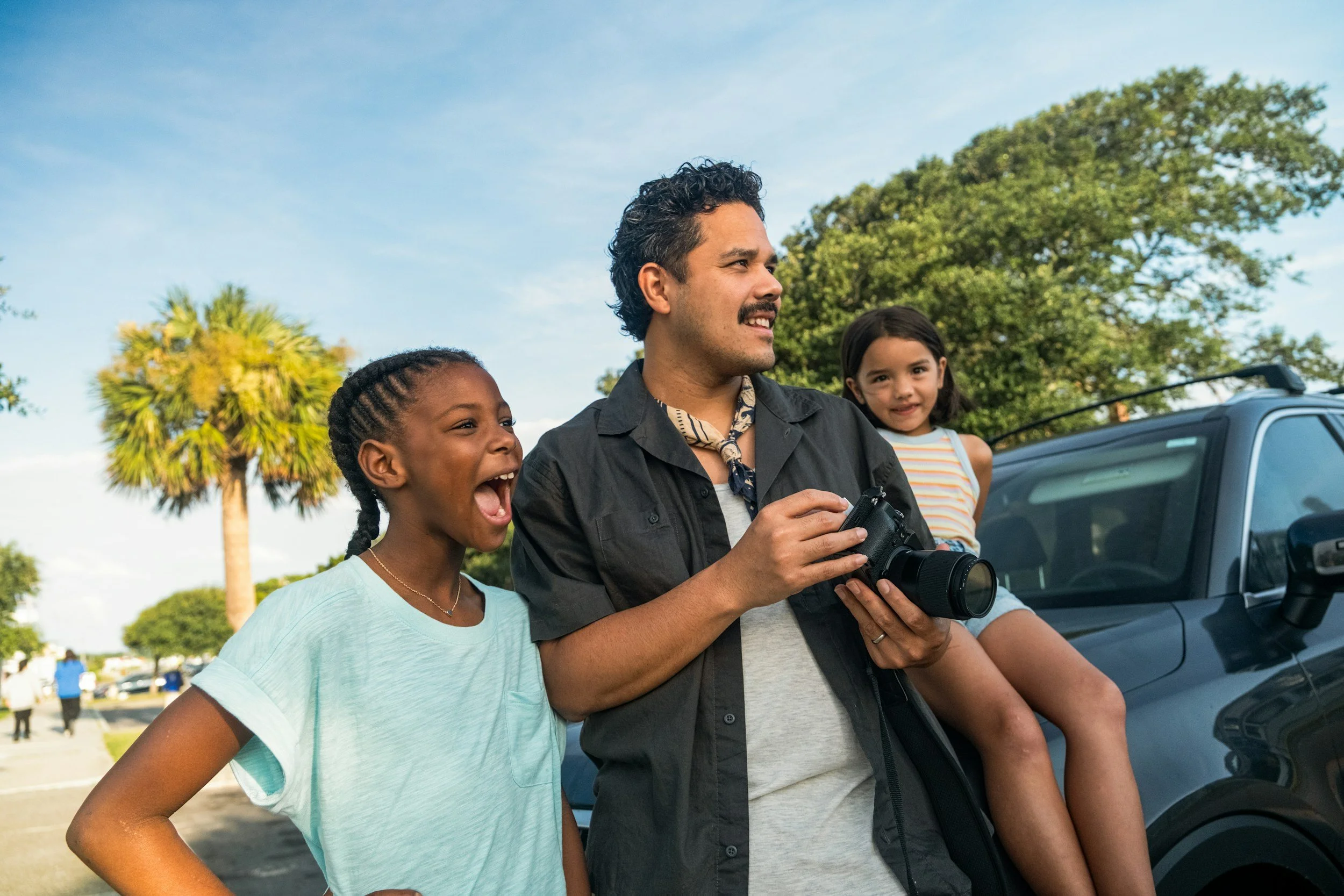
Dad with two daughters
My family is working on living within the Buddah’s teachings of the Four Givings this holiday season. We are doing this with everyone, but especially within the relationships of our blended family. When in doubt we explore how we can give these four givings to one another.
Four Givings:
Giving of faith
Giving of joy
Giving of hope
Giving of Convenience

The goal isn’t perfection.
The goal is connection, safety, and authenticity in your blended family. Sharing these gifts with them will bring you closer without the extra stuff getting in the way.
San Diego offers a beautiful backdrop for healing, connection, and creating new memories—sun, ocean, nature, warmth, and the chance to build traditions that feel uniquely yours.If you’re a high-achieving step-parent in San Diego and want deeper support navigating the emotional demands of blending families, I offer both individual and couples sessions—in-person in San Diego and virtually across California. Reach out for a consult here!