

Couples Trauma Therapist Guide: Infidelity, Narcissism & Repair
Struggling after infidelity? A San Diego couples trauma therapist breaks down narcissism, empath myths & evidence-based repair strategies that work.

How to Know If You Need Trauma Therapy: 7 Nervous System Signs High Achievers Miss
You do not have to look overwhelmed on the outside to need trauma support. Many high-achieving adults quietly live with shutdown, hypervigilance, chronic tension, and emotional exhaustion while keeping everything together. Trauma therapy can help you move out of survival mode and into steadier connection, clearer thinking, and more grounded daily life.

Trauma Therapy vs. High-Performance Coaching: What the Research Actually Says About Them (& Why They Might Benefit You at Different Times)
Evidence-based guide comparing trauma therapy and high-performance coaching for couples, high achievers, and neurodivergent relationships. Learn which you need.

Co-Regulation & Secure Attachment: A Science-Backed Guide for ADHD, Trauma, and High-Achieving Couples
Learn science-backed co-regulation strategies to build secure attachment in ADHD and trauma-affected couples. Expert tools from a couples trauma therapist.
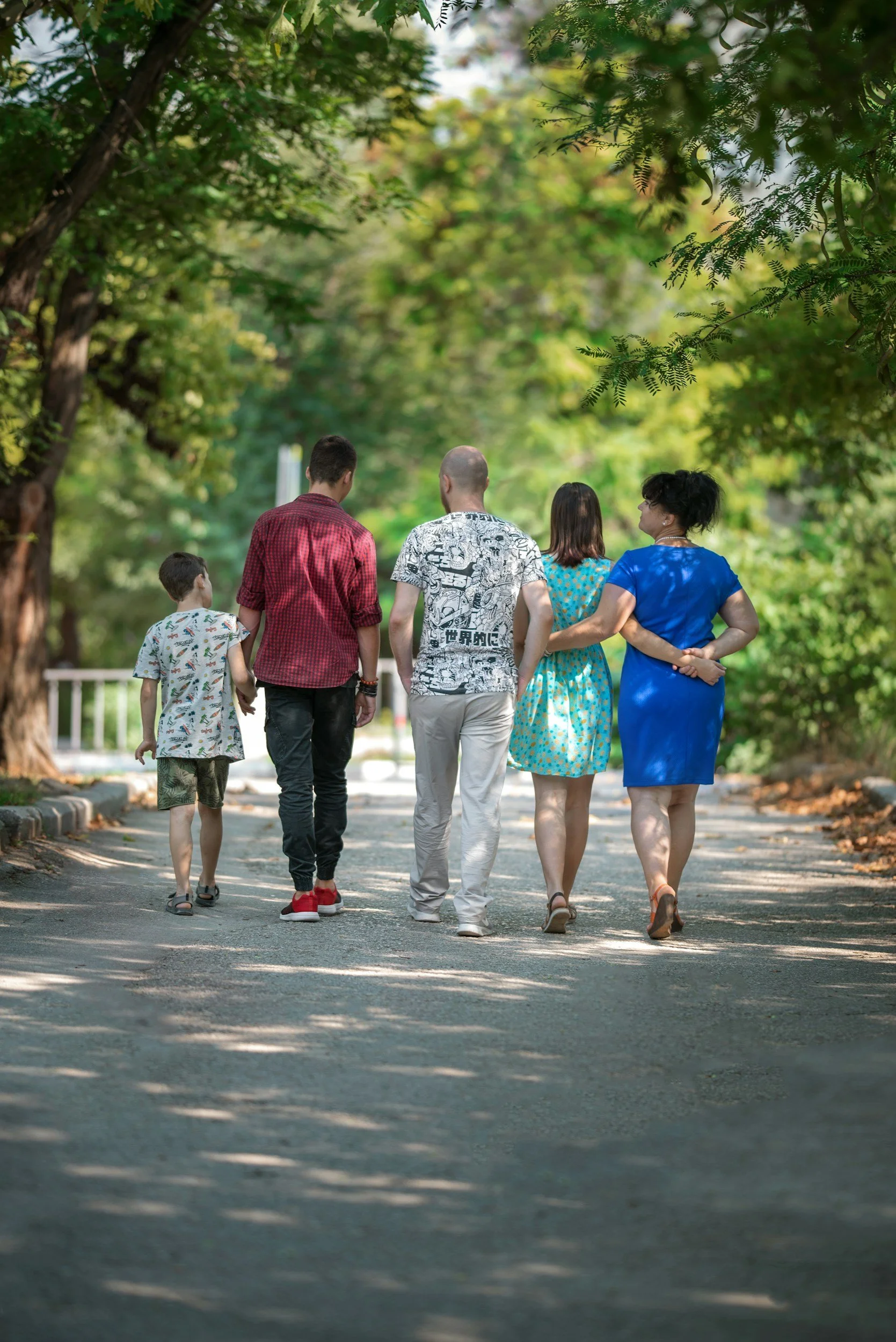
Neurocomplex Families: How to Support Neurodivergent Adults, Couples, and Kids (Evidence-Based Approaches)
Neurodivergent brains aren’t broken. Learn common mental health patterns (ADHD, autism, dyslexia, CPTSD), plus evidence-based couple and parenting supports.

AI in Relationships: Tool or Threat? A Couples Therapist's Guide to Connection Without Burnout or Disconnect
Struggling with tech in your relationship? Learn how San Diego couples therapy helps you use AI as a tool for connection — not a replacement for intimacy.
AI in Relationships: Tool or Threat? A Couples Therapist's Guide to Connection Without Burnout
If one of you loves using AI to plan, organize, or prep for hard conversations — and the other just wants more you — you're not alone. This isn't a technology problem. It's an attachment conversation, and it's one I see often in my couples therapy practice in San Diego.
The Core Truth
AI can support your relationship. It can't replace it.

The Optimized Life Is Lying to You (And So Is Your August To-Do List)
Why "optimizing" your life is quietly burning you out — and how to build systems rooted in values, not perfection, as August chaos hits. Evidence-based strategies inside.
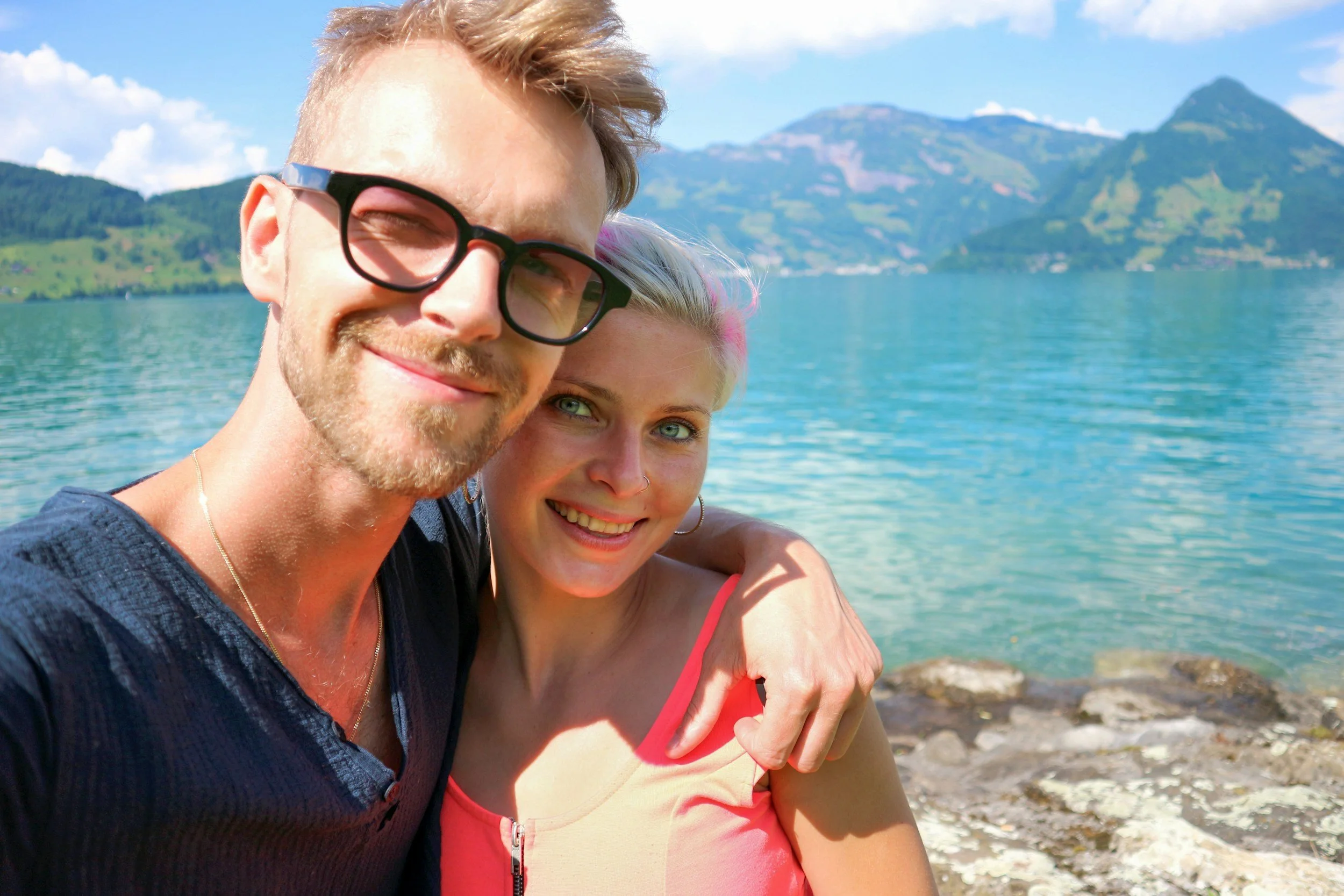
How to Build a Couples Relationship You're Actually Proud of and Inspired by Every Single Day
Evidence-based strategies to build a thriving relationship. Amy Anderson, LCSW, Couples Therapist in San Diego & PA, helps couples heal & reconnect. Trauma-informed. LGBTQ+ affirming. ADHD-aware. As a Licensed Clinical Social Worker with 22+ years of experience supporting couples in San Diego, CA and Pennsylvania, I help partners move from surviving to thriving — through evidence-based tools for connection, communication, and repair. Whether you're newly committed, blending families, or facing empty nest burnout, this guide offers science-backed strategies to build the relationship you deserve. Learn more at amyandersontherapy.com

How to Spot an Authentic Partner: What the Research Says About Values, Energy, and Attachment Styles
Finding an authentic partner isn’t about luck—it’s about recognizing patterns. In this blog, you’ll learn how to spot a genuinely healthy match using the latest relationship research: shared values (not just shared interests), matched energy (reciprocal input and output), and attachment styles (secure patterns vs. anxious/avoidant dynamics).
If you’ve ever felt confused by chemistry, exhausted by one-sided effort, or unsure whether your relationship is “real,” this is your guide to choosing love with clarity—so you can build a connection you’re proud of every day.

Mental Health, Personality Development & Parent-Child Estrangement: What Every Active Parent Needs to Know ( Protect Your Relationship)
Parent-child estrangement is silently affecting up to 28% of families — and new 2026 research published in Frontiers in Psychology reveals that your personality traits may be predicting whether your relationship survives. As a couples and family trauma therapist, I break down the science behind estrangement, how childhood mental health shapes adult relationships, and the evidence-based tools — including Attachment Therapy, DBT, IFS, and the Gottman Method — that can help you safeguard your parent-child bond before strain becomes silence. If you are a parent who wants to understand why estrangement happens and how to prevent it, this is the most important article you will read this year.

What Exactly are Small Things Often for Couples? Let’s Break Them Down
Why "Small Things, Often" Is the Most Underrated Relationship Strategy.
We live in a culture that celebrates the dramatic — the proposal, the apology, the comeback story. And while those moments matter, they are not what sustains a relationship across decades, across loss, across the mundane Tuesday nights where nothing is wrong and nothing is particularly right and you're both just... there.
What sustains a relationship is repetition of care.
It's the partner who asks "how are you actually doing?" — and waits for a real answer. It's the couple who keeps their weekly meeting even when they're tired, even when life is loud, even when they'd both rather just scroll their phones and call it a night. It's the pair who have learned that showing up small and showing up often is more powerful than showing up big and showing up once.
Research in couples psychology — including the foundational work of Dr. John Gottman — consistently shows that the quality of a relationship is determined not by the absence of conflict, but by the ratio of positive interactions to negative ones. A 5:1 ratio of positive to negative moments is what separates couples who thrive from couples who erode.
The 6 Hours of Magic is a practical, week-by-week way to build that ratio — intentionally, sustainably, and in a way that actually fits your real life.

Summer Sex on the Spectrum: A Couples Trauma Therapist's Guide to Intimacy, Sensory Sensitivity, and Connection
Summer is supposed to feel like freedom — but for couples navigating intimacy on the autism spectrum, it can quietly become the most sexually and relationally overwhelming season of the year. As a couples trauma therapist specializing in neurodivergent relationships, I see it every summer: the heat, the broken routines, the sensory overload — and the growing distance between two partners who genuinely love each other but can't find their way to connection.
In this post, I'm breaking down exactly why summer amplifies sensory and sexual challenges for autistic couples, what the research says about nervous system regulation and intimacy, and the practical, evidence-based strategies I use with real couples in therapy to help them reconnect — even in the hardest seasons.
Whether you're the neurodivergent partner, the neurotypical partner, or somewhere beautifully in between — this is for you.
👉 Read the full post at AmyAndersonTherapy.com

Summer Survival: When Everyone in Your House Is Running on Empty
Burned-out parents, overstimulated kids, and strained relationships — a Couples Trauma Therapist shares real strategies for summer 2026 survival, connection, and less shame. Is your summer feeling more survival mode than sunshine? You're not alone. When kids are overstimulated or understimulated — and parents are running on empty — the whole family nervous system pays the price. In this post, a Couples Trauma Therapist breaks down exactly what's happening in your home, why the shame is making it worse, and the evidence-based strategies that can actually help. No perfection required.
Why Can't My Partner Just Love Me for Me? (Without the Labels, the Therapy Homework, and the Pressure to Be "Fixed")
If you've asked this question — whispered it at 2am, or shouted it in the middle of an argument you've had seventeen times before — this is the post you've been waiting for.
As a couples therapist who specializes in trauma, ADHD, and autism, I hear this question more than almost any other. And it deserves a real answer. Not a deflection. Not a reframe that quietly tells you to be more grateful. A real, honest, clinically grounded answer that actually takes your pain seriously.
In this post, we're covering:
Why diagnoses sometimes create distance instead of understanding in relationships
The specific pain of being neurodivergent — autistic, ADHD, or trauma-impacted — and feeling like your partner wants to fix you rather than love you
The difference between accommodation and management — and why it matters enormously for intimacy. What your partner might actually be feeling underneath all the research and the systems and the suggestions
What healthy neurodivergent love genuinely looks like — not perfect, but real
Concrete steps both partners can take right now, today, without a therapy appointment
Whether you have ADHD, autism, complex trauma, or you're the partner trying desperately to connect with someone you love and constantly getting it wrong — this post was written for you.
Because you don't need to be finished to deserve love.
You deserve to be loved exactly as you are. Right now. And this post will show you what that can actually look like in practice.
Read time: approximately 15 minutes. Worth every one of them.

Summer Burnout Blues: Why High-Achieving Parents Are Running on Fumes (And What You Can Do About It)
If you are navigating burnout, family estrangement, or the particular weight of parenting without a support network, working with a licensed therapist who specializes in high achievers and family systems can be a powerful first step. You do not have to figure this out alone — even when it has always felt like you do. This Blog will talk to you about what you can do to make steps to get out of the rat race and start feeling your feels, authentically, without loosing yourself, your business, your kids, your presence.

AI Inequality in Mental Health: How the Therapy Crisis Is Leaving Trauma Survivors Behind
Two people. Same trauma. Completely different outcomes — determined not by willpower or worthiness, but by zip code and income.
America's mental health therapy crisis has created a devastating divide: those with resources access transformative, evidence-based trauma care through IFS, EMDR, DBT, and Inner Child healing. Those without get algorithms.
This is AI inequality in mental health — and it is silently destroying the healing journeys of millions of individuals and couples navigating trauma recovery.
The science is clear. The solutions exist. What's missing is the urgent, collective demand for equitable access to trauma care that every human being deserves.
Read the full breakdown of how the system is failing trauma survivors — and what must change now.

Father’s Day and the Quiet Corners of Distance: A Guide for Families Navigating Estrangement, Addiction, and Healing
Father’s Day is a tough time for many who fundamentally have an avoided or disconnected Father and Child relationship. This can be with your own father, your step-father, your bonus father, or the father you wanted to be for your kids. It’s ok to talk about the Great Divide as this is a time to connect and celebrate, many feel lost in this holiday and that’s ok too.

Juneteenth Celebrations amidst the current 2026 Unrest- How Deeply Impacting it is for Couples and Families
Juneteenth (June 19th) commemorates the end of slavery in the United States and has been a federal holiday since 2021. Social justice and supporting my clients with information and evidenced based strategies to help them connect safely to themselves and others is my passion. I love supporting all my clients with celebrations, however I cannot do that with this sensitive historical subject as it is deeply complex towards their acceptance of self, being seen, heard, or considered in a deeply oppressive world in 2026.
Supporting my couples and families the past decade, we have witnessed unprecedented polarization in American society, measurably affecting intimate relationships, family structures, and social bonds. Below is a comprehensive, evidence-based synthesis of research findings.
The research is clear as you will read in this blog, political intermarriage dropped from ~20% to ~9% of couples per Pew Research. So many couples and families struggles with communication over politics, it’s becoming the number one deal breaker for singles dating per the university of Maryland. Political election-related relationship loss estimated 16% lost friend/family over 2016 election (Ipsos/Reuters 2017).

Father Wounds, Father's Day & the Relationships We Build: A Healing Guide for Couples
Father's Day can be one of the most emotionally complicated days on the calendar right behind Mother’s Day.
For millions of adults, it doesn't arrive with greeting cards and backyard barbecues. It arrives with a quiet, unnamed grief — a hollow feeling in the chest that's hard to explain to a partner who may not understand why a commercial or a social media post can unravel an entire weekend.
If you or your partner carry what psychologists and attachment researchers call a "father wound" — the emotional, psychological, and relational injury that results from an absent, emotionally unavailable, abusive, addicted, critical, or inconsistent father figure — you are likely experiencing its effects in your relationship right now, whether you recognize it or not.
This isn't about blame or shame or guilt. It's about understanding.

Evidence-Based Pathways for Strengthening Relationships: A Practical Guide for Polyamorous Couples & Committed Couples in San Diego, CA
Polyamorous couples in San Diego, CA can strengthen connections with evidence-based couples therapy in San Diego, CA. Learn inner child work, reduce negative schemas, and cultivate responsible communication.