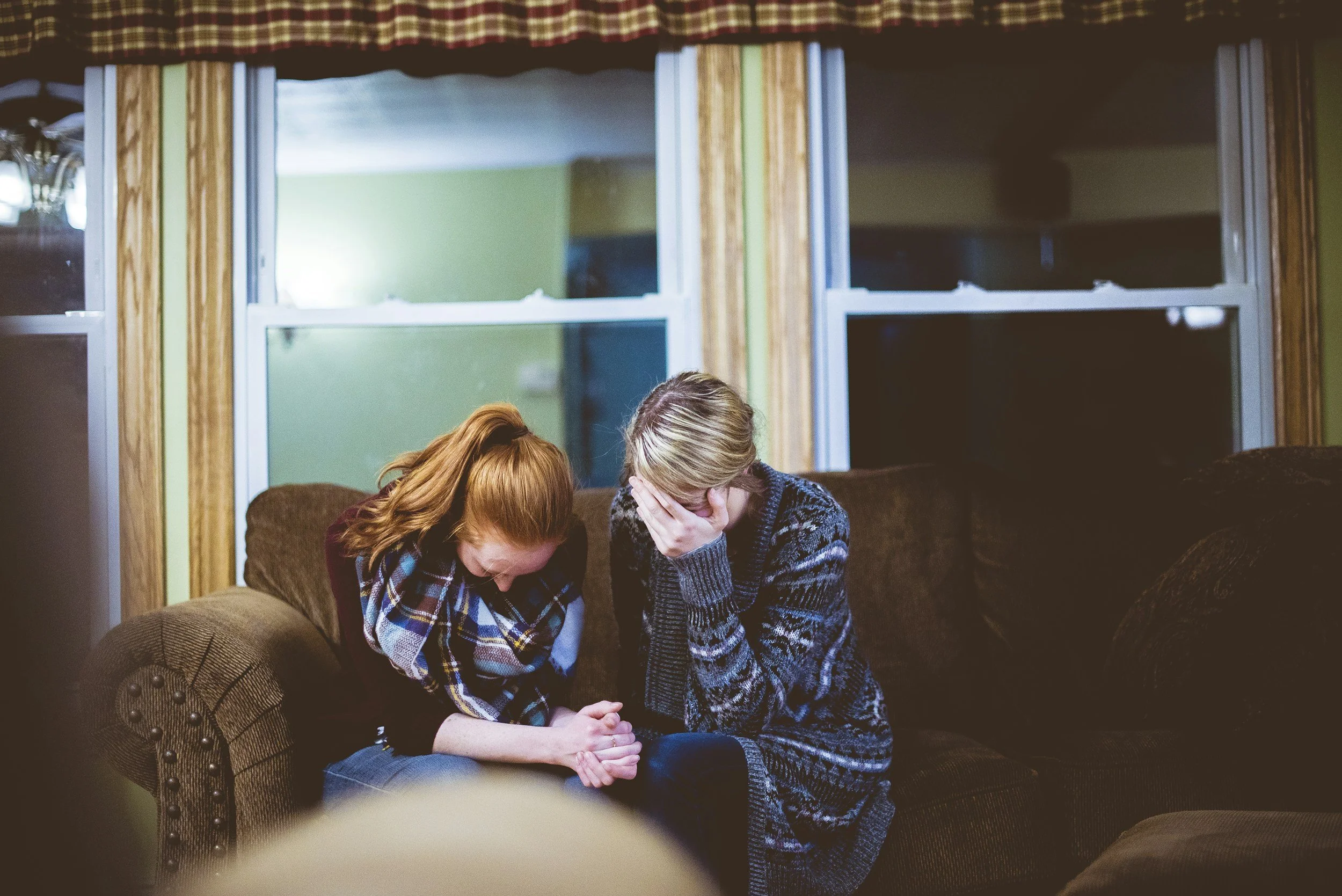
couple crying together on a couch
TL,DR. Yes, couples therapy can help after an affair—but being sorry is only the beginning of rebuilding trust.
An apology matters. Remorse matters. Accountability definitely matters.
AND trust is rebuilt through consistent behavior over time.
Maintenance so to speak.
If you're recovering from infidelity, have been touched as a youth with infidelity, or a past relationship you may be wondering whether your relationship can ever feel safe again. It also doesn’t have to be an emotional or sexual infidelity. Infidelity can mean breaking a promise of exclusivity to be physically, emotionally, sexually, financially, intellectually (digital/cyber) connected to the same values with the person you are committed with.
Per the data which is questionable as most people do not feel comfortable to disclose this information - infidelity typically impacts couples in the dating phase 60-70% more than those who are in committed relationships, however committed relationships going through challenging times of distance, relationship ups and downs (i.e. new members like children, elders, adoptions, health components, and mental health challenges) can cause up to 20-37% of committed couples.
You may also be in a bad place and wondering whether couples therapy is worthwhile when the damage seems too significant. Many people don’t feel they should apologize or go to therapy for their wrongdoings, some jump at the opportunity to rectify their wrongdoings and the pain they unintentionally caused their partner. There is no universal answer about whether a relationship should continue.
Couples therapy can provide a structured environment for determining what happened, what each person needs, and whether genuine repair is possible.
Why “I'm Sorry” Often Doesn't Feel Like Enough
The betrayed partner may hear: “I'm sorry”
But internally be thinking:
“How do I know this won't happen again?”
“Why didn't you tell me?” While thinking they were inherently unlovable for not knowing the clues.
“What else don't I know about them now that this has come out?”
“Did you love them?” “Did you love them more than me and our family?”
“Was our relationship ever real?”
“Can I trust you when you're away in the future?” “Can I trust you when you are busy or preoccupied?”
The injured partner isn't necessarily refusing to forgive. Their nervous system may be looking for evidence that the relationship is safe again and cannot locate it without supportive information and emotional safety plans. From the research and my professional view, that evidence generally comes from consistent behavior from both parties, not words alone.
What Genuine Accountability Looks Like
Accountability isn't the same thing as self-punishment. Accountability is allowing the injured partner the space to heal and understand.
A partner taking responsibility may need to:
Answer reasonable questions honestly
Stop minimizing the betrayal due to their own uncomfortableness
Acknowledge its impact to the betrayed partner
Maintain appropriate transparency while trust is rebuilt
Respect boundaries & commitments
Follow through consistently with communication
Examine the choices & patterns that contributed to the affair
Tolerate the partner's understandable emotional responses (relational trauma triggers) without becoming defensive, critical, stonewalling, and contemptful every time
Accountability also means avoiding the opposite extreme- ignoring, dismissing, avoiding, minimizing, and or going cold due to shame, guilt, blame, or inner critic. Understanding the relationship context may be clinically important to see the cracks and holes that brought on the infidelity. But relationship problems do not excuse betrayal and that is why many couples need a neutral, mediator to develop strong skills to communicate and understand ways to co-exist during the healing phase.
Two truths can coexist:
The relationship may have had problems. The decision to have an affair still belongs to the person who made that decision to , betray, and withhold information. This violation commitments the other person assumed were still part of the relationship contract. The decision to make it right is both by giving and taking to rebuild the trust.
Why Betrayal Can Feel Traumatic
Infidelity can disrupt a person's basic assumptions about safety and attachment, especially if they thought they had a safe, secure couple bubble relationship.
The betrayed partner may suddenly question their own judgment.
“How did I not see it?”
“What else have I missed?”
“Can I trust myself?”
This is part of why betrayal can have effects that extend beyond the relationship itself.
Sleep, concentration, appetite, sexuality, work, parenting, and social functioning may all be affected. Their sense of self-worth, lovability, and overall functioning may be in question and some people may need to seek inpatient or outpatient treatment if they have a history of trauma or attachment wounds. A trauma-informed approach recognizes that the betrayed partner may need time and support to regain a sense of stability. Just as if someone had diabetes, cancer, or a broken leg- their partner needs to be a part of their treatment protocol.
What Couples Therapy Can Address
We typically think we are right and the other person is wrong, however with relationships - especially intimate, we really need to find the common ground of understanding to come closer. There is no right or wrong in Couples Therapy, there is just “I understand you” or “that makes sense now that you’ve explained your perspective”. However, many people have been taught that infidelity is inherently bad, religious and government agencies, grandparents, uncles, and aunties all whisper when someone engages in an infidelity, however it usually is an indicator that person is struggling with over or under attachment components- caretaking or controlling too much and being unable to communicate their needs.
Once the relationship is stable enough for conjoint work, therapy may address several areas for both partners at the same time.
Understanding the Betrayal
Not to endlessly analyze the past, but to understand the conditions and choices that led to it is the superpower of breaking down the information. Each partner has a perspective and neither is right, they are both individuals who are hurt and wanting to be understood better.
Rebuilding Transparency
Couples may need new agreements about communication, technology, finances, social situations, or other areas depending on the circumstances.
Processing the Emotional Impact
The betrayed partner needs space for anger, grief, fear, and uncertainty. They need the space to ask questions without defensiveness, stonewalling, contempt, or being gaslight. It’s super important for the couple bubble to repair emotional safety through processing and sharing information. The partner taking responsibility benefits from understanding the underlying feelings of the betrayed partner to build empathy, remorse, understanding, and compassion for self and others throughout the process- they heal when they are forgiven and understood.
Rebuilding Friendship
Trust isn't only about preventing another affair. Healthy relationships also need positive experiences of connection of the other aspects of the relationship to build back the positive perspective- social, physical, emotional, sexual, intellectual, and financial. So many things are absorbed with infidelity and trust violations that hurt the friendship. If you hurt your friend, they may not be your friend anymore or they may put distance up for their own emotional regulation. So the couple needs to make sure that the Couple Bubble rebuilds emotional, social, intellectual, financial, and physical safety as well, which builds trust, commitment, and love maps. Without this the relationship can be replaying codependency and traumatic responses unconsciously.
Restoring Intimacy
Physical and emotional intimacy often change dramatically after betrayal. There is no correct timeline. One couple may feel more connected sexually afterwards, and others feel like they just started in a new relationship again. Taking it slow, allowing for safety and security checks, ensuring consent is here from both parties would be best.
Creating a New Relationship
Many couples make the mistake of trying to return to the exact relationship they had before the affair. Sometimes the goal is different. The relationship may need to become more honest, more intentional, and more emotionally connected than it was previously.
What If the Betrayed Partner Can't Stop Checking?
Hypervigilance can be a common response after betrayal.
A partner may check phones, locations, social media, or repeatedly ask questions.
From the outside, this can look controlling.
From the inside, it may feel like an attempt to restore safety & security, when the betraying partner was strong with their convictions of honesty and transparency previously.
Therapy can help the couple understand what the checking behavior is trying to accomplish while also developing healthier ways to create security & safety plans.
Does Couples Therapy Mean You Have to Stay Together?
No. This is an important distinction. Couples therapy can help partners explore whether to stay together to grow and heal or how the relationship can be uncoupled safely.
It can also help people make thoughtful decisions about separation when remaining together is not healthy or desired.
The therapist's job isn't to force reconciliation. It is to support honest, clinically appropriate work.
Finding a Couples Therapist After Infidelity in San Diego
When betrayal is involved, you want a therapist who can hold multiple truths.
The betrayed partner deserves validation & emotional support with their relational trauma experience.
The partner who had the affair deserves space to understand their behavior without being reduced to a single act which results in inner critic, shame, guilt, blame, and feeling defective.
And the relationship deserves an honest assessment.
In my San Diego practice, I work with couples navigating infidelity, trauma, attachment wounds, addiction, emotional disconnection, and other complex relationship concerns.
If you're wondering whether couples therapy could help after betrayal, you don't need to know yet whether your relationship will survive. I have seen how compassionate responses, nervous systems that are regulated and aligned in their own self-worth and lovability, listen with the intent to understand thrive and grow like never before after the rupture.
You can begin by asking a smaller question:
“What would it take for us to understand what happened and decide what comes next for us to grow together?”
Reach out anytime if you would like to reinforce the relationship you have.