Neurocomplex Families: How to Support Neurodivergent Adults, Couples, and Kids (Evidence-Based Approaches)
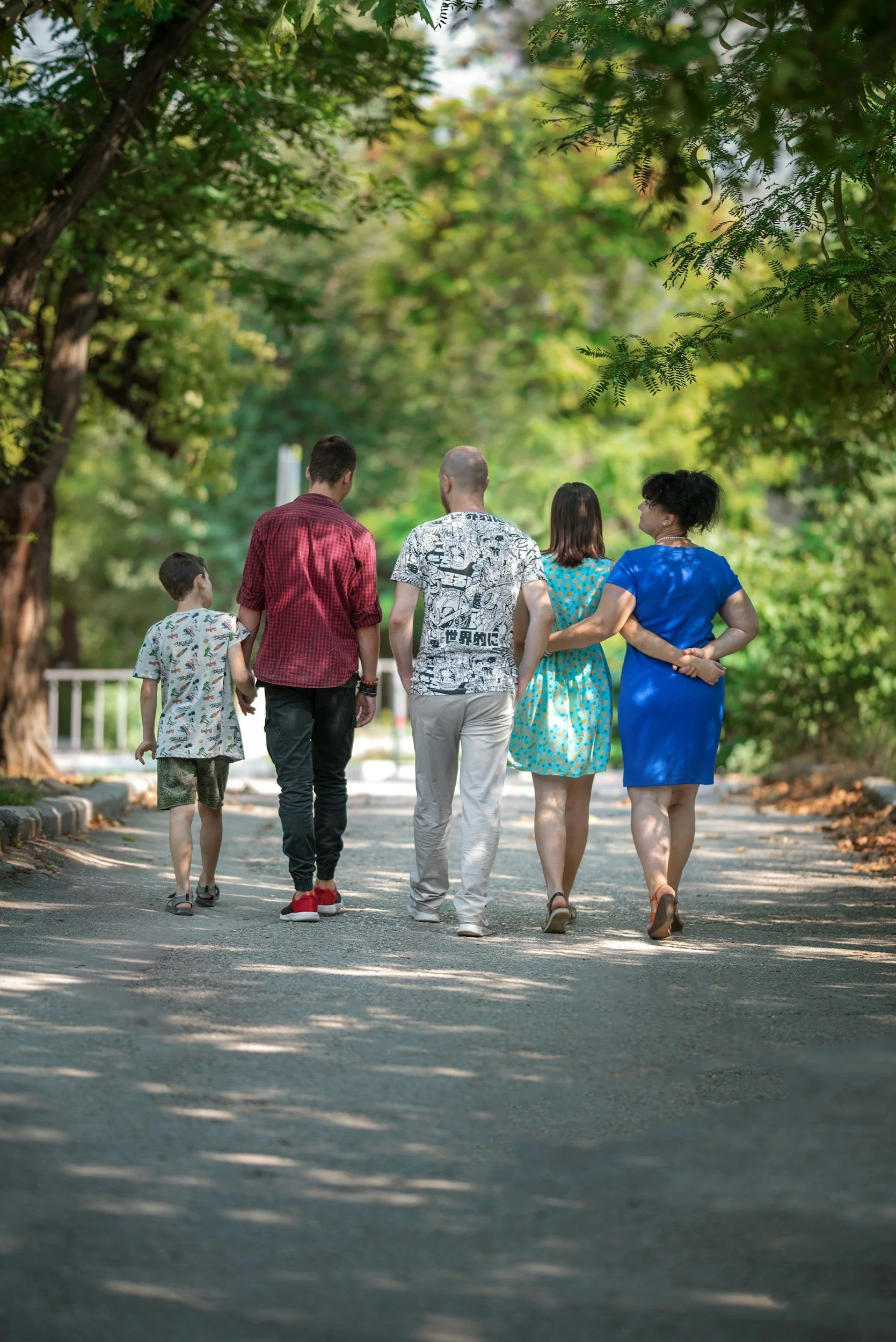
Neurodivergence Isn’t Just about a Diagnosis—It’s a Nervous System Reality Check
Which requires accommodation, not judgement and avoidance.
What this means is that it doesn’t matter the diagnosis or the severity of the diagnosis as long as we have compassion, self-awareness and nervous system regulation. This means we can honor each other’s need for the differences they present- less sensory input, or more sensory input, less communication, verses more communication, and ensuring accurate effective understanding and comprehension to head towards one another. We don’t need to lean into our diagnosis as we are victims or powerless over our outcomes, actually the opposite- we can use the information to empower our decisions and ability to have nervous system regulation. allows for the body to have emotional regulation- whether that is movement, learning, stretching and ensuring our body is receiving all the sensory release and tension as possible.
Neurodivergent Mental Health: It’s Often Anxiety, Depression, and Overwhelm—Not Character
Let’s say the quiet part out loud: in neurodivergent families, “mental health problems” are often what happens when a nervous system gets overloaded in a world that doesn’t match its wiring. Neurodivergence isn’t brokenness. It’s difference. And difference—especially under chronic stress—can absolutely increase anxiety, depression risk, shutdowns, and relationship strain.
The good news? When you understand the pattern, you can build supports that reduce symptoms without trying to fix the person.
Why Mental Health Challenges Are More Common (And Why That Matters for Couples)
It won’t be a big surprise to many people that Anxiety and Depression are so prevalent in our global community secondary to over consumption and its contributing factors - poverty, hunger, lack of safe housing, or healthy employment and family lives. Anxiety and Depression to me professionally are often an indicator of a deeper infrastructure problem that isn’t working so we like to examine it and treat it to the best of our abilities to see if it can help the greater good of the human, couple, family, and community.
Anxiety (Sensory/Social Threat + Uncertainty)
Anxiety can be helpful for us to recognize when a threat is around and we need to be alert and on guard, however over time it can turn into a different type of monster for our minds, bodies, spirit, and soul. Per the WHO, Anxiety Disorders impact about 4.4%to 4.5% of the Global Population, approximately 359 million people. This is powerful to reflect that its one of the largest drivers for worldwide mental burden. This is why we need to understand where our Anxiety is coming from - is it in social settings, medical dynamics, tranportation, is it when we are alone, is it when we have too much going on with lights, sounds, temperature, or when there are too much expectations on us? It is present to prevent us from going towards aspects that cause us stress and strife.
Many neurocomplex folks and their kids have a baseline anxiety due to the systems in place not working for them (i.e. school, medical, recreational, social clubs, etc.). In neurodivergence, anxiety often isn’t “just worrying.”
It’s the body saying: This is unpredictable, loud, or socially dangerous.
- Sensory threat: noise, lights, textures, crowd energy
- Social threat: unclear “rules,” tone ambiguity, feeling misread
- Uncertainty: plans changing, “be ready” instructions, shifting expectations
Couples Breakdown: anxiety can look like irritability, withdrawal, over-explaining, or control. But clinically, it’s frequently an emergency mode. Not a personality defect.
Depression (Chronic Overload + Masking + Shame)
Depression is unfortunately common in humans especially now that we are getting most of our entertainment in sedentary ways in front of a screen or working hours upon hours. It is estimated that 332 million people, 4% of the total population, 5.7% of adults, 6.9% of women, & 4.6% of men, the number one leading global disability. Many times its genetic and environmental factors- getting sick, getting injured, having a hard time with integration in social context, transitioning from youth to adulthood, adulthood to late adulthood, and geriatric age are common. Many of our most successful adults individuals and overworked, high with expectations, performative actions, and engaging in a multitude of connections and relationships. Again, for the majority of neurocomplex adults, parents, and children- there is a great deal of grief, depression, and overwhelm that is added onto these diagnoses as they are primary caregivers and navigating a world where they feel inherently too much or too little for.
Depression in neurodivergent people can be powered by three familiar engines:
- Chronic overload: daily demands outpace nervous system capacity
- Masking: performing “normal” for acceptance (and paying the cost later)
- Shame: repeated experiences of “I should be able to handle this” → self-blame
Masking can work short-term. Long-term, it creates a painful paradox: I’m trying so hard, and it still doesn’t land.
Couples Breakdown: depression may show up as numbness, low motivation, withdrawal, or anger turned inward. A partner may interpret it as lack of care. Often it’s depletion.
Executive Dysfunction (plans fail, not character)
So much of what we do is about engaging in systems- communication, family, social, financial, intellectual, and physical task completion which dictates how we engage in the world. Emotional regulation (which is a bit of anxiety, depression, mixed together) goes along with executive dysfunction and can wreck havoc on diet, exercise, self-care, work life balance, family relationships, and therefore equates to a lot of health complexities later in life. Executive dysfunction doesn’t mean “can’t.”
It often means: can’t start, can’t sequence, can’t time-estimate, can’t shift without losing the thread—especially under stress. So when plans fall apart, the core issue usually isn’t morals. It’s mechanics.
Couples Breakdown (and this is where the fight lives):
One partner thinks, “You didn’t care.”
The other thinks, “I cared so much—and now I feel sick with shame.”
That shame is a symptom amplifier. It turns logistical failures into emotional warfare.
Sensory Overwhelm (behaviors = data)
This is a powerful one, I feel everyone I talk to you has sensory overwhelm- temperature, lights, sounds, more people, less people, more movement, less movement and it goes along with learning and connecting with others. Per the research, 20-30% of us are impacted by high sensory processing issues. Working with Neurodiverse and Neurocomplex folks- this absolutely makes sense. So many people are distracted and upset in their environments and are masking it until the end of the work day or school day, then they release those sensory expectations in their residential environment and feel more connected to themselves.
If you ever were significantly depressed or anxious- you do not have the ability for a lot of sensory input- talking, activities, facial expressions, etc. Sensory overwhelm can drive “behavior” that looks intentional but is often physiological overload:
the person goes quiet
gets snappy
refuses an activity
melts down in predictable places (stores, school pickup, transitions)
Behaviors are data—your job is to figure out what the nervous system is reacting to.
Couples Breakdown: instead of
“Why are you being difficult?” try
“What input just became too much?”
Social Isolation (belonging needs translation)
Social isolation is a major issue in our global community. Social isolation & Loneliness raises the risk for premature death by roughly 29% - it’s health impact is equivalent of smoking 15 ciggarettes a day. It increases heart disease risk by 29%, stroke risk by 32%, and dementia risk by 50% in older adults, while worsening healing and overall life prognosis. These are not great statistics and numbers and if you are following - anxiety and depression increase social isolation and causes more medical complexities with those who are neurocomplex. It’s as simple as 1, 2, 3. We are humans, humans need other humans to be healthy. If you aren’t connected to another human, I would start engaging in therapy right away.
Neurodivergent people can be surrounded and still feel alone. That’s not dramatic—that’s real. Belonging requires “translation,” like:
reading tone and subtext
keeping up with pacing and switching topics
knowing when it’s appropriate to speak (and stop)
being understood without constant re-explaining
When translation feels expensive, people withdraw. Then loneliness increases. Then anxiety/depression can intensify.
Amy’s Couples tips: “I need space” isn’t rejection. It’s often nervous system recovery—and it deserves a clear, reassuring return plan.
Rejection Sensitivity & Masking
The Shame Engine With Great Timing
Some neurodivergent people experience rejection sensitivity—not as hypersensitivity for attention, but as a heightened threat response to perceived criticism, silence, or disapproval.
Add masking and you get a volatile loop:
misunderstandings happen
shame spikes (“they hate me / I’m wrong”)
either shutdown or reactivity follows
the partner feels confused or blamed
the cycle repeats
Clinically, rejection sensitivity is often tied to trauma exposure too (more on that next).
Developmental Differences vs Trauma-Driven Neurodiversity (PTSD/CPTSD )
Developmental differences (like autism and ADHD) are innate neurological wirings present from birth, whereas trauma-driven neurodivergence (like PTSD and CPTSD) is an acquired nervous system adaptation caused by chronic stress or abuse. Globally, misdiagnosing one for the other leads to systemic treatment failures, straining public health and social support systems worldwide. There is a lot of shame associated with parental stress inventory (PSI) and that is why when kids are in their parents care- Autism and ADHD are more prevalent diagnoses, however with more accurate reporting and historians (adult children) they can be recognized for the actual infliction of abuse, neglect, and childhood trauma that would be PTSD/ CPTSD.
A crucial distinction: developmental neurodivergence and trauma-related neurodiversity can overlap—but they’re not identical.
Developmental differences often involve lifelong patterns in communication, sensory processing, learning, and executive functioning.
Trauma-driven neurodiversity (PTSD/CPTSD) adds threat learning: hypervigilance, triggering, attachment injuries, and emotion regulation shifts.
Many neurodivergent folks carry both histories: difference and relational stress. That’s why the treatment needs to be individualized and trauma-informed. Many individuals who have biological neurological wirings are also prone to being abused, neglected in their homes due to the difficulty to parent and the PSI and that is why it’s also important to be trauma informed and individualized with care.
Couples Breakdown: if conflict reliably triggers threat responses—fight, flight, freeze—then “communication skills” alone won’t be enough. You need pacing, rocking, walking, yoga stretches, safety, and repair protocols.
Practical Family Strategies That Reduce Symptoms Without “Fixing” the Person
Think of this as “change the environment so the nervous system can succeed.” Because willpower is unreliable when the brain is overloaded.
Reduce friction: external supports > willpower
Instead of “Try harder,” build systems:
calendars, checklists, visual schedules
timers for transitions
written instructions (less mind-reading required)
sensory tools: noise-canceling headphones, comfy clothing, quiet escape plans
“start cues” for executive dysfunction (a 10-minute timer + body-doubling)
Amy’s practical tip: reduce cognitive load first. Expect better regulation second.
Repair protocols (tone, time, return plan)
A repair protocol prevents the spiral before it becomes a courtroom drama.
Rupture → Repair → Return example:
Tone: “I’m getting flooded; I’m not discussing this right now.”
Time: set a specific pause (20 minutes, not “later”).
Return plan: “We come back at 8:15 and address one next step.”
Amy’s trauma-informed and neurodivergent-friendly tip: it lowers threat and improves follow-through.
Accommodations as Access
Accommodations aren’t “special treatment.” They’re access to functioning in systems that were never designed for neurodivergent brains.
For children: extended time, reduced reading load, sensory breaks, flexible formats.
For adults: workplace accommodations, structured expectations, predictable meeting formats, clear written guidelines.
Advocacy point: without accommodations, families often confuse “no access” with “noncompliance.” That’s where shame grows.
Amy’s Bottom Line:
Safety, Predictability, and Compassion Build Long-Term Mental Health
If your neurodivergent partner or child seems anxious, depressed, shut down, or “hard,” don’t default to character judgments. Default to nervous system needs:
1) What input was too much? (sensory/social)
2) What support is missing? (design/accommodations)
3) What threat response is happening? (especially with PTSD/CPTSD)
You’re not fixing a person. You’re building safety and predictability—so the relationship can thrive in safe mutuality. If you struggle or need any assistance in the department of support - reach out here.