The Optimized Life Is Lying to You (And So Is Your August To-Do List)
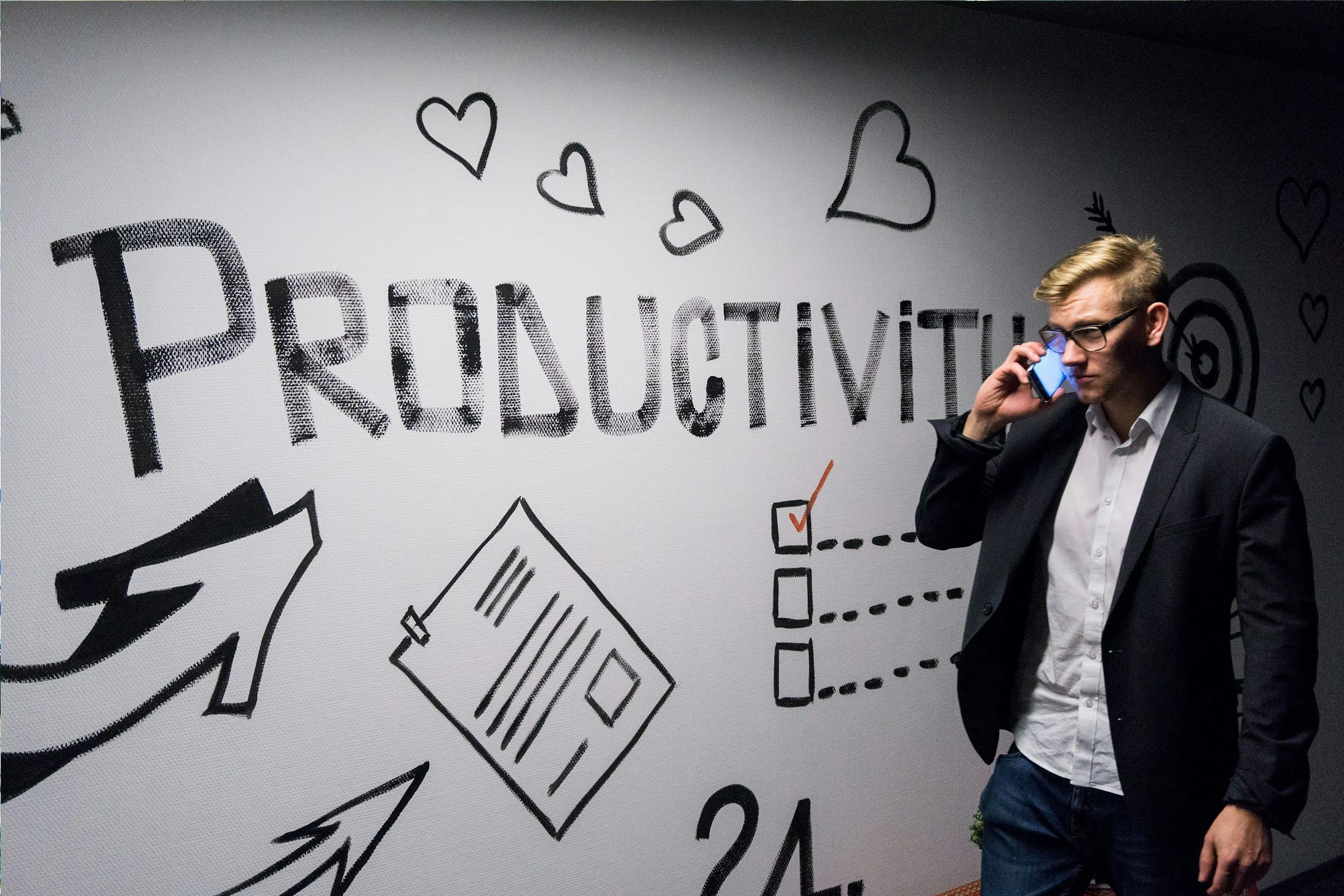
AI is impactful and here to stay fortunately & unfortunately. We need to remember the important part of why AI was developed, to help us spend time and do the things that really matter to us. Our Connections & Growth.
Our Connections & Growth.
There's a specific flavor of exhaustion that hits every August. It's not the burned-out-by-December exhaustion. It's sneakier. It shows up disguised as productivity.
You're supposed to be "winding down" — before the big '“rev up” which is September back to school season, the collective cultural nervous system agrees that summer is for slowing down, for margaritas and audiobooks and letting the kids stay up late. Except you're also still working full-tilt, your kids are either underfoot demanding entertainment or about to transition back to school with a fresh set of logistics (supply lists, schedule changes, new anxieties, your own), and somehow you're expected to do all of this while also "being present" and "not letting work take over your vacation" and "protecting your relationship" and "getting your steps in."
You didn't sign up for a rest month. You signed up for a juggling act with a rest-shaped costume on.
If you're a high-achieving, hardworking, deeply-feeling person — especially if you're neurodivergent, or anxious, or both — you probably didn't respond to this by scaling back. You responded by optimizing. You made a system. A schedule. A color-coded calendar. Because if you can't slow down, you can at least get efficient.
One of my favorite podcasts this month has been listening to Tommy Wood and Andrew Huberman on how to Accelerate Learning and Increase Cognitive Capacity, which I think is a positive addition to this blog to really hone in on what truly matters for each of you.
Here's the problem: optimization was never going to save you. And the research backs this up.
Why Optimizing Your Life Doesn't Actually Fix the Overwhelm
Let's get clinical for a second, because this isn't just vibes — this is nervous system science.
Your body doesn't know the difference between "busy" and "unsafe." Stephen Porges' polyvagal theory explains that our autonomic nervous system is constantly scanning for cues of safety or threat — a process called neuroception. When you're overcommitted for long enough, your body stops registering "busy" as a temporary state and starts treating it as your baseline environment. Chronic sympathetic activation (the fight-or-flight gas pedal) doesn't turn off just because you built a better Notion dashboard. Optimization can make you more efficient at doing too much. It rarely makes you feel safe enough to do less.
Executive function doesn't run on willpower — it runs on capacity. For ADHD and Autistic brains especially, researchers like Dr. Russell Barkley have shown that executive function (planning, prioritizing, transitioning between tasks, emotional regulation) is a finite resource, not a moral trait. August transitions — schedule changes, sensory shifts, new routines — are executive function expensive. If you're already running a deficit from a summer of "flexible but somehow busier" scheduling, back-to-school logistics can tip an already-full system into shutdown, meltdown, or the kind of flat, joyless numbness that gets mistaken for laziness (it is never laziness).
Optimization is often perfectionism wearing productivity's clothes. Dr. Brené Brown's research on perfectionism describes it as a defense mechanism — a belief that if we just do things perfectly enough, we can avoid shame, blame, or judgment. Optimizing your family's schedule, your relationship's "quality time," your own self-care routine down to the minute — it feels like control. But underneath, it's often anxiety trying to prevent an emotional outcome (failure, disappointing someone, falling behind) through logistics. You can't logistics your way out of an emotional need.
And here's the kicker: the Gottman Institute's decades of couples research show that relationship satisfaction isn't correlated with how well-organized a couple's life is — it's correlated with how well they turn toward each other's bids for connection. You can have the most optimized shared calendar in the Western hemisphere and still feel miles away from your partner if you're both just... executing tasks near each other.
Optimized isn't the same as authentic connection. Optimized is a system that runs well. Authentic is a life that reflects what actually matters to you. Orchid AI is trying to replace parents and the emotional tasks for parents, which I truly understand the appeal as a working parent, however - true connection and real happiness comes from real connection, which is imperfect and not optimized.
What This Actually Looks Like (A Composite Scenario)
I want you to meet "Natasha and Marcus" (a composite of the many couples I've worked with who'll recognize themselves here — details changed to protect anonymity).
Natasha is a creative director for her own agency. Marcus runs ops for a fortune 500 company. Two kids, one about to start kindergarten, one starting middle school — two entirely different sets of anxieties and administrative duties asked of them daily. Both Natasha and Marcus are the "high-functioning" type: the ones colleagues describe as "so on top of it," the ones who show up early, over-deliver, and never seem to drop a ball, the ones their college friends knew would be successful when they first met them.
By late July, Natasha had built a shared family calendar with color-coded categories, a meal-prep rotation, a "connection time" block scheduled for Tuesday and Thursday nights, and a personal habit tracker for her own therapy homework. It was, genuinely, an impressive system.
It also wasn't working. Marcus felt managed rather than partnered. Natasha felt like she was the only one holding the structure up, and resentful that her "connection time" block felt like just another task to check off for her and others in her household, instead of desired time. Neither of them could say what they actually wanted their family life to feel like — they could only describe what needed to get done.
In a couples coaching session, when I asked, "If none of this had to be efficient — if it just had to feel true to who you both are — what would August look like?" — there was a long pause. Neither of them had asked that question in years. They'd been so busy optimizing the how that they'd lost the thread on the why.
That pause is the whole point of this blog.
The Reframe: Values Aren't a Vibe, They're a Filter
Here's what I want to offer instead of another productivity hack: values-based systems instead of optimization-based systems. Novel concept in 2026, but one rooted in research and longevity of mental and relationship health.
This isn't about ditching structure — structure is genuinely regulating for ADHD and Autistic nervous systems, and pretending otherwise does you no favors. It's about what the structure is built to protect.
An optimized system asks: How do I fit more in, more efficiently?
A values-based system asks: What actually matters here, and how do I protect it — even if that means fitting less in?
Dr. Steven Hayes' Acceptance and Commitment Therapy (ACT) research is genuinely useful here. ACT distinguishes between goals (achievable, finishable — "get the kids' school supplies") and values (ongoing directions — "I want to be a present, unhurried parent during transitions"). Goals can be optimized. Values can only be lived toward, imperfectly, day by day.
Most burnout in high-achievers isn't from having too many goals. It's from having goals disconnected from values — a calendar full of "shoulds" with no felt sense of why underneath them.
So before you build another system this August, ask:
What do I actually value in how I want to show up for my partner during a busy season — not perform, value?
What do I want my kids to feel from me during this transition, even if the logistics are imperfect?
What do I need — not want, need — to not fall apart by September?
These questions are uncomfortable because they require you to admit that "doing it all well" isn't actually one of your core values. It's a coping mechanism. And that's okay. Coping mechanisms got you here. They just don't have to be the whole plan going forward.
5 Concrete, Low-Spoon Strategies for August (and Beyond)
Not "journal about your feelings." Actual, doable tools.
1. Build one "values sentence" per domain, not a values essay.
Instead of a full mission statement, write one sentence each for work, relationship, parenting, and self. Example: "At work this month, I value protecting my energy over proving my worth." Tape it somewhere you'll see it when you're about to overcommit. This is a nervous-system-friendly shortcut — it gives you a filter without requiring executive function you don't have to spare.
2. Use "boundary scripts" instead of improvising boundaries in the moment.
RSD (rejection sensitive dysphoria) and people-pleasing patterns make real-time boundary-setting genuinely hard — your brain floods with anticipated conflict before you even open your mouth. Pre-write 2-3 scripts you can use on autopilot:
"I can't take that on right now, but I can revisit it in September,"
or
"We're keeping evenings device-free this week — I'll follow up tomorrow."
Scripted boundaries require less in-the-moment emotional bandwidth than improvised ones.
3. Schedule recovery, not just connection.
Jess's "connection time" block failed because connection can't be forced on a schedule when both partners are depleted. Instead, schedule recovery time first — genuine nervous-system downregulation (quiet, low-stimulation, no performance required) — and let connection happen in the space that recovery creates, rather than demanding it show up on command.
4. Externalize the transition, don't just survive it internally.
For kids (and yourselves), name the transition out loud: "This week is going to feel different because school's starting. It's normal if everyone's a little more tired or cranky." Naming a transition reduces the nervous system's threat response to it — this is basic trauma-informed psychoeducation, and it works on adults too. Say it to your partner. Say it to yourself.
5. Pick one system to under-optimize on purpose.
Choose one area — meals, one kid's activity schedule, your own morning routine — and deliberately make it "good enough" instead of optimized. This isn't laziness; it's a practice in tolerating imperfection without spiraling, which is a genuinely trainable skill (exposure-based approaches from CBT research support this directly).
Your Permission Slip
You do not have to optimize your way through August. You do not have to have a color-coded system for every domain of your life to prove you're handling it. You're allowed to have a summer that looks like "good enough, on purpose" instead of "impressive, exhausting."
The goal was never a perfectly running life. It was a true one — one where your systems protect your values instead of just protecting your reputation for having it together.
If you and your partner are noticing that your "efficient" life has started to feel disconnected, resentful, or quietly lonely — that's not a sign you need a better calendar. That's a sign worth bringing into a session.
Ready to build a life that's authentic instead of just optimized? Book a Consultation with me, or start with reading over some more of Amy’s Anecdotes Advice Avenue Blog Posts for more evidence-based strategies and relatable content. And if you want these strategies delivered monthly (with considerably less oversharing than a group text), sign up for Amy’s newsletter.