Blending Families from Different Backgrounds: Evidence-Based Strategies for Healing Together
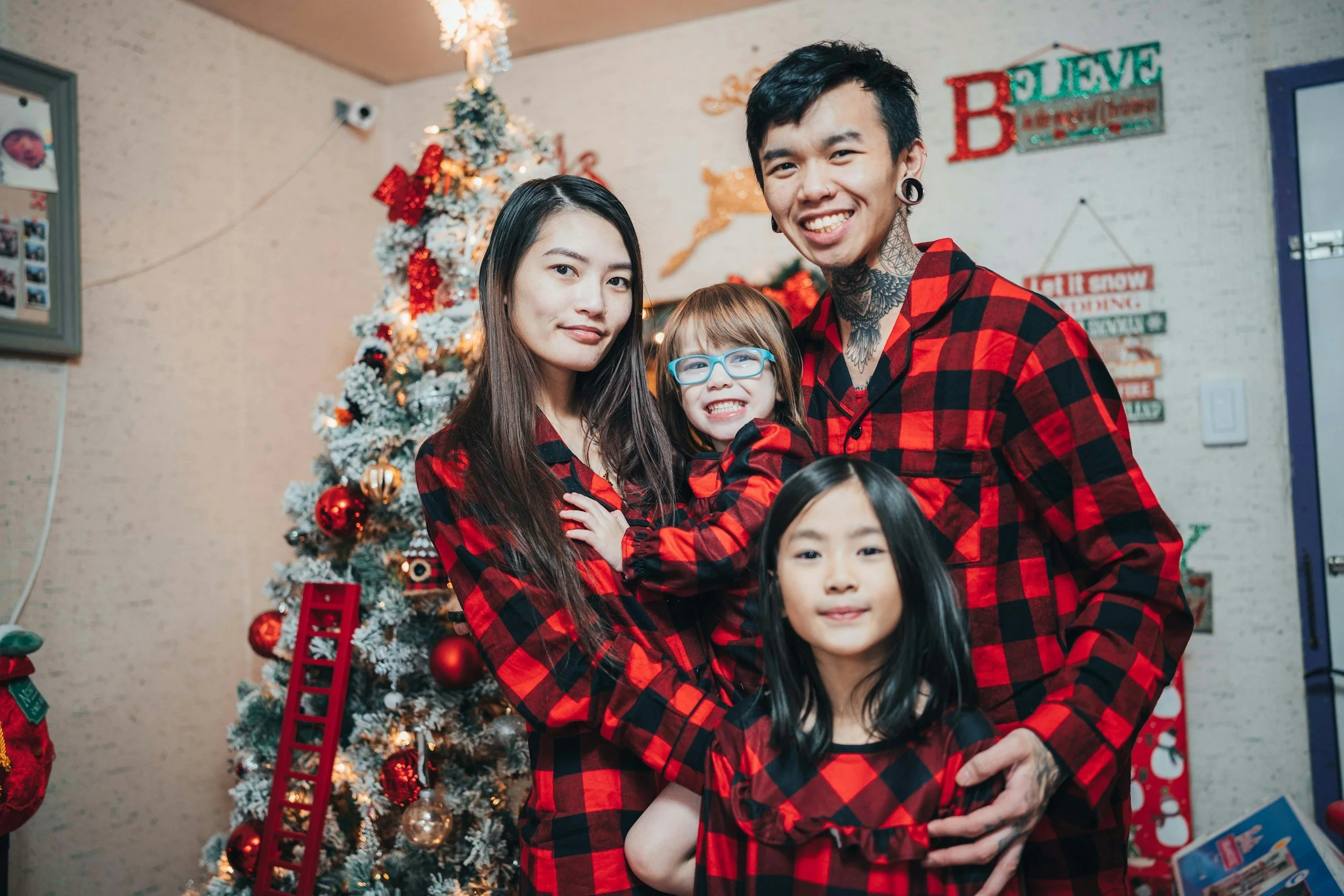
blended family posing in front of the Christmas tree with matching pajamas
Blending families is always a process—but when partners come from different cultural backgrounds, physical spaces on the planet, emotional, social, and sexual developmental needs, or intellectual and or spiritual backgrounds; the task becomes far more layered and perplex. Differences that are small in day-to-day life can feel enormous in the family context: a religious ritual that’s central to one partner, a language habit a child finds confusing, a disability that requires adaptations, or different comfort levels with emotion and discipline. Left unaddressed, these differences can create chronic friction, loyalty binds for children, and unresolved grief for adults.
The good news: research and clinical practice point to clear, evidence-based steps that help blended families heal, build shared meaning, and thrive. Below I summarize what the research says and give practical tips and “how-to” strategies you can start using today. (If you’d like help applying these to your unique family, you can schedule a consultation here)
What the research really shows (quick run down)
Children in stepfamilies or blended families often face unique stressors—loyalty conflicts, changing routines, and identity questions—that can increase internalizing symptoms if not addressed. Early, intentional family work improves adjustment. (PMC)
Interventions tailored to blending (and those adapted from couple and family models) show promise, but rigorous outcomes research is still growing; the best results come from using evidence-based relational therapies adapted with cultural humility. (Homepages UC)
Clinicians are urged to incorporate multicultural competence and culturally responsive strategies when families differ across ethnicity, religion, or social background—doing so improves engagement and outcomes. (American Psychological Association)
These core findings guide the recommendations below.
A trauma-informed, culturally responsive framework (why this matters)
When people from different backgrounds come together, each person brings a set of cultural meanings, coping strategies, attachment histories, and family narratives. If a partner’s way of expressing love (gift giving, physical touch, shared rituals) doesn’t match the other’s expectations, it’s easy to misread intent and escalate conflict. Add in prior trauma, disability, or minority stress, and the nervous system can interpret everyday moments as threats.
That’s why I work from a trauma-informed + culturally responsive stance: validate safety needs first, learn each person’s cultural logic, and adapt evidence-based tools to fit your family’s identity. Research demonstrates that tailoring interventions to cultural and spiritual contexts increases trust and improves therapy outcomes. (PMC)
Core evidence-based approaches that help blended families
Emotionally Focused & Attachment-Based Work (EFT/EFFT)
Attachment-informed interventions help family members identify the unmet needs beneath conflict (fear of abandonment, shame, loss) and create corrective emotional experiences. There are adaptations of emotionally focused family work specifically geared toward stepfamilies that focus on bonding and reorganizing interaction patterns. (Dr. Rebecca Jorgensen)Structured Couple & Family Skills (Gottman, Behavioral Family Therapy, DBT-informed skills)
Skill building—repair sequences, “soft start-ups,” and problem-solving frameworks—reduces escalation and improves day-to-day functioning. These are particularly helpful where differences in parenting style, social expectations, or intellectual approaches create repeated arguments. (Homepages UC)Cultural Humility + Strengths-Based Practices
Use the family’s cultural resources (storytelling, rituals, community supports) as scaffolding for new blended traditions rather than erasing them. The APA and multicultural therapy literature recommend an ecological, strengths-based approach for families with different cultural or spiritual backgrounds. (American Psychological Association)Paced Integration & “Nacho Parenting” (role clarity for stepparents)
Research and clinical guidance suggest that step-roles are best introduced gradually—initially prioritizing relationship building over discipline (the “not your kid” or “nacho” parenting approach), then slowly expanding responsibilities. This reduces resistance from children and avoids boundary confusion. (Verywell Mind)
Practical, research-backed tips & tricks for blended families with different backgrounds
1) Map the differences—then ask what matters most
Create a family chart that lists areas of difference (culture, faith, language, physical needs/adaptations, social rules, sexuality, cognitive styles). For each item, answer: “Is this a non-negotiable core value?” or “Is this negotiable or adaptable?” Mapping clarifies what must be honored and where compromise is possible—research shows this reduces conflict and confusion. (PMC) There is nothing better than a good value breakdown to show where time and resources should go.
Quick exercise: at dinner, ask each person to name one tradition they’d like to keep and one they’re willing to modify.
2) Prioritize emotional safety & belonging through rituals of connection
Rituals signal continuity and belonging, it also provides a stable framework for children and adults on what to expect. Preserve at least one meaningful ritual from each parent’s background (research supports continuity as protective for children) and co-create 1–2 new family rituals that feel inclusive—this fosters identity integration. Examples: a monthly “culture night,” alternating holiday observances, or shared volunteer acts. (PMC)
3) Use curiosity, not correction, when cultures collide
When a child or partner feels hurt by a cultural mismatch, respond with curiosity: “Help me understand why this is important to you.” One of the best things I was taught in therapy was the phrase…. “I wonder why…” A curious stance reduces shame and models cross-cultural learning and emotional openness. This is often the first thing to go with emotional de-regulation, so calling it back to control it helps everyone. Clinical evidence supports curiosity as a relational repair tool that builds empathy. (PMC)
4) Co-parent with clarity and a written plan
Different backgrounds often mean different norms around values, discipline, chores, or technology. Write a short co-parenting agreement that addresses daily routines, discipline expectations, and how decisions will be made for medical or educational issues. Research finds explicit role clarity reduces parental conflict in blended families and promotes connection for the child. (Wiley Online Library)
5) Slow the integration for kids—protect their loyalty ties
Children frequently experience loyalty binds, secondary to them relying on their parents for survival. Use staged introductions to the stepparent role, keep disciplinary responsibilities with the biological parent at first, and give children time and language to express loyalty or grief. Following a gradual integration plan is supported by clinical guidance and reduces behavioral backlash. (Verywell Mind)
6) Build cultural competency in the household (and everywhere)
Learn the basics of each other’s cultural and spiritual background: language phrases, important holidays, dietary practices, and communication norms to help turn towards all parties in the family. Invite elders or extended family to the conversation so they can learn and grow in their understanding of blending families. If you work with a therapist, ask whether they use culturally responsive or trauma-informed methods to engage in interventions. The APA multicultural guidelines encourage clinicians to incorporate ecological context into treatment. (American Psychological Association)
7) Attend to accessibility & physical needs thoughtfully
If a partner or child has a disability or chronic health needs, adapt environments proactively (sensory-friendly spaces, predictable transitions, mobility accommodations). Families that plan for physical accessibility report better cohesion and lower stress. (If you need help writing an accessibility plan, I can draft one with you.) (Wiley Online Library)
8) Use therapy strategically: short-term modules + long-term integration
Because stepfamily and blended family research suggests interventions are most effective when tailored, consider a combined plan: 6–12 sessions of structured skill training (communication, co-parenting, role clarity) plus periodic attachment-focused or trauma-informed sessions to process grief and identity. In my experience, this is the sweet spot for families as they are often navigating so much - schedules, work, extended family members and friends. Programs adapted for stepfamilies and couples show better outcomes than generic advice alone. (Homepages UC)
Healing stories: real-world examples (composite, de-identified)
The Ramirez-Nguyen family preserved both parents’ holiday rituals (posadas + New Year’s lanterns) and created a new annual “community service day.” Children reported feeling more included and less torn from their original family components.
The Miller-Osei household used a written “roles & rituals” plan so the stepparent could build trust before taking on discipline—stress decreased and family meals became calmer. Its all about the balance in these situations, both giving and taking responsibility.
These are the kinds of outcomes that research and my clinical work both support when families intentionally combine traditions and boundaries.
When to get professional help
Consider therapy when:
Conflict is chronic or escalating
Children show anxiety, withdrawal, or acting-out behaviors
Cultural or spiritual differences cause repeated ruptures
Trauma histories emerge from attachment wounds
You need help creating a co-parenting or accessibility plan
Evidence shows individualized family therapy increases family stability and child wellbeing. If you’d like to explore how this work could look for your family, you can learn more about my approach and book a consultation: Amy Anderson, LCSW — Book a Session.
Amy’s final thoughts
Blending families across cultural, physical, emotional, social, sexual, intellectual, and spiritual lines is complex intricate work—but it’s also an opportunity for richness, resilience, and new shared meaning. The research is clear: the best outcomes happen when families combine intentional rituals, cultural humility, role clarity, gradual integration, and evidence-based relational skills. If you want tailored strategies, I offer trauma-informed, attachment-focused therapy for blended families in San Diego (in-person) and via telehealth across California and Pennsylvania. Visit my site to read more about services, download resources, or schedule a consultation.